
Clear aligner consultation
Thinking about clear aligners?
Crowding, spacing, shifted teeth, or a straighter smile? A clear aligner consultation can help you understand whether clear aligners may fit your goals.
- Learn whether clear aligners may fit your smile goals
- Understand how doctor-guided planning begins
- Know what the first visit and next step usually include
Clear aligners
Removable trays
Doctor-guided plan
What your visit helps answer
Your visit helps the office review your smile goals, your bite, any past braces or aligners, and whether clear aligner treatment may be appropriate to explore further.
Past braces, older retainers, bite changes, or teeth that shifted back can all matter when the office reviews treatment fit.
This first look can help you start, but only an evaluation can determine whether clear aligners make sense and what the next step should be.
What the first visit covers
A simple first step focused on your smile, bite, and whether clear aligners are the right fit.
Talk about what you want to change
Crowding, spacing, shifted teeth, or a straighter smile overall.
Review whether clear aligners may be a fit
The visit helps the office review your smile, bite, and history before making any treatment recommendation.
Know the next planning step
You should leave with a clearer idea of what may come next and whether further planning is recommended after evaluation.
How planning usually gets organized
A planning view that still keeps the personal side of care.
After the first visit, planning may move through digital records, a doctor-reviewed setup, trays with check-ins, and retainers at the finish. The exact recommendation still depends on your smile, bite, and goals.
Start with a clear baseline
Photos and a digital scan help the office review where your smile and bite are starting from.
Keep the setup personalized
The next step is still guided by what the doctor sees in person, not by a one-size-fits-all template.
Support the finish too
Retainers help protect the final position so the last phase feels planned, not tacked on at the end.
Planning outline
What the next step may include after your consultation
Digital scan and photos
Doctor-reviewed setup
Tray sequence and check-ins
Retainers at the finish
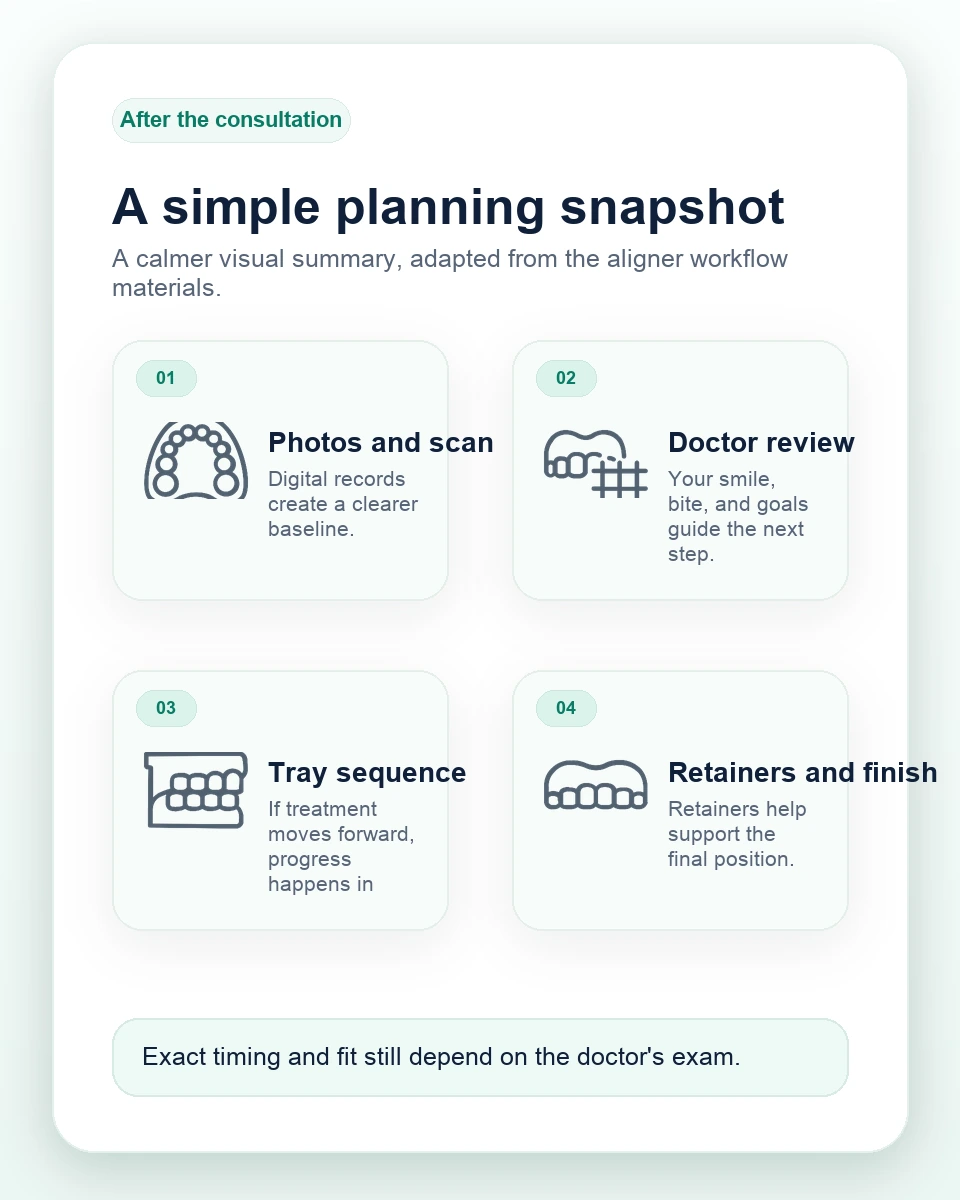
Photos and a digital scan help the office map your starting point before any plan is built.
The doctor reviews your smile, bite, and goals before deciding what planning step makes sense.
Active treatment usually moves in steps, with office check-ins helping the plan stay on track.
Retainers help support the final position after active movement is complete.
- The starting position of the smile and bite
- Any past braces or aligners that still matter
- Whether records and planning should move forward
This planning map is only a guide. Your fit, timing, and exact next steps still come from the doctor’s evaluation.
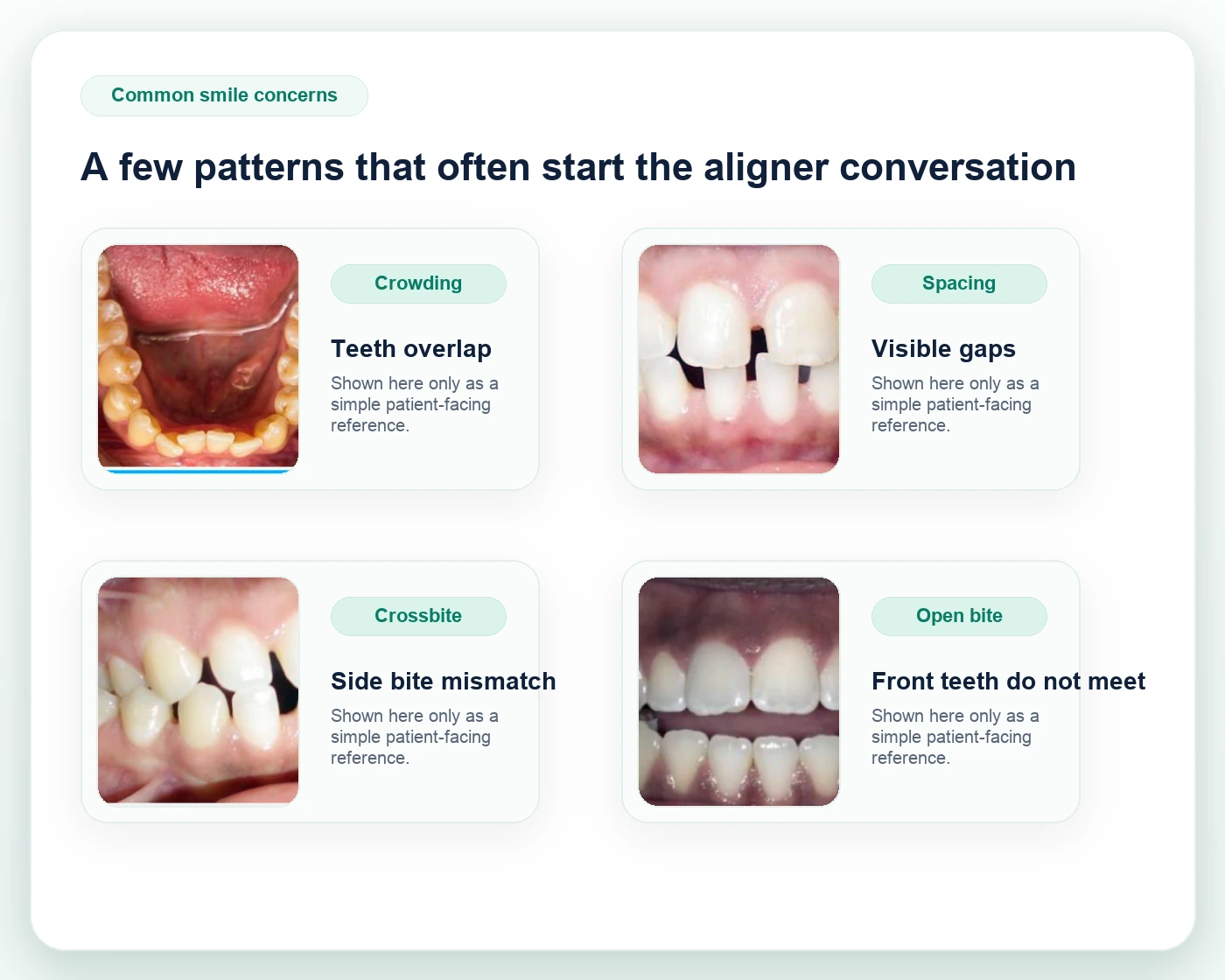
Common smile concerns and digital views
A patient-friendly look at the kinds of smile and bite patterns that often come up in an aligner consultation.
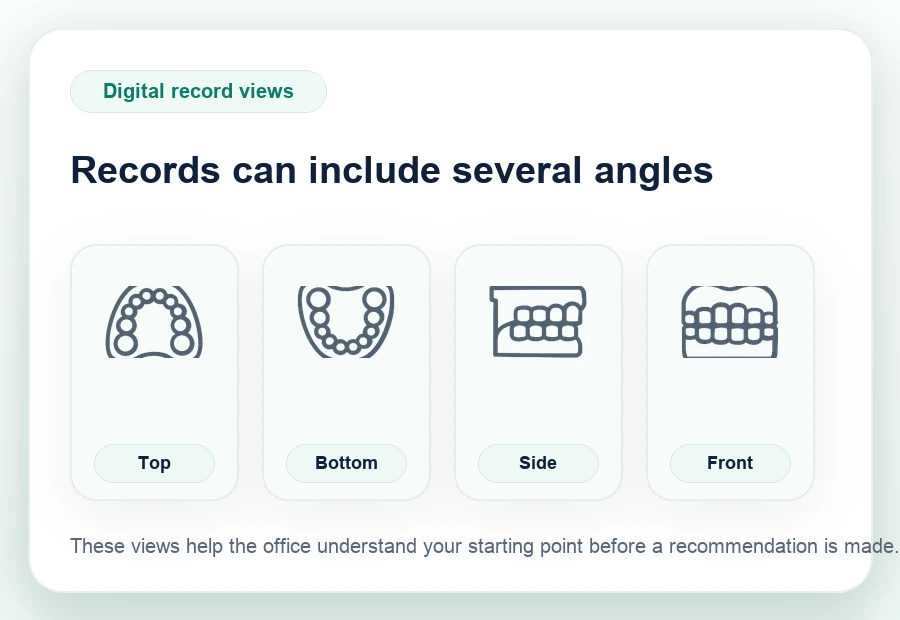
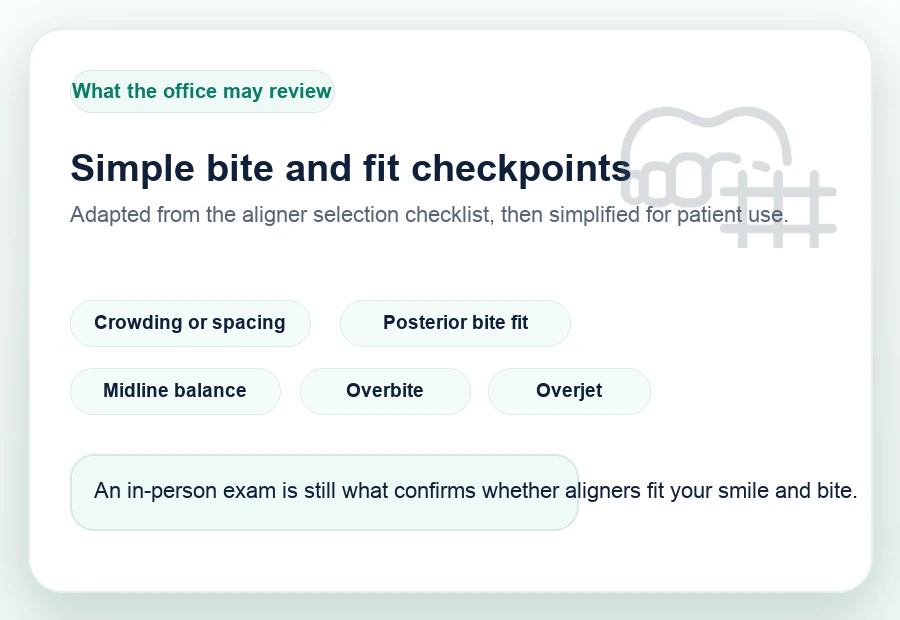
These simple graphics show some of the smile concerns, digital records, and bite checks the office may review when deciding the next step.
FAQ
Common questions before you come in.
Clear aligners are removable trays used to move teeth gradually over time. The consultation helps determine whether this kind of treatment makes sense for your smile and bite.
The clearest way to know is to have the doctor evaluate your smile, bite, and treatment goals before any plan is recommended.
That is still worth discussing. Be sure to mention any past orthodontic treatment so the office can factor it into the conversation.
No. This first look can help you start the conversation. Final fit, timing, records, and planning still depend on an evaluation and doctor review.
Evidence & sources
This FAQ draws on systematic reviews of clear aligner tooth movement, case selection, and wear protocols, not brand language alone. See clear aligner evidence and sources.
What happens after you reach out
The next step should feel simple.
After you reach out, the office reviews your request, contacts you, and helps you understand what comes next.
The team reviews your request
Your smile goals and basic information help the office understand what you are looking for before reaching out.
The office contacts you directly
The team answers early questions and helps schedule the right type of visit.
Planning follows the evaluation
Any treatment recommendations, timing, and detailed planning happen after the office has seen you in person.
Ready for the next step?
Start with a clear aligner consultation built around your smile goals.
If you want a straighter smile, request a visit and let the office help you understand whether clear aligners are the right next step.